


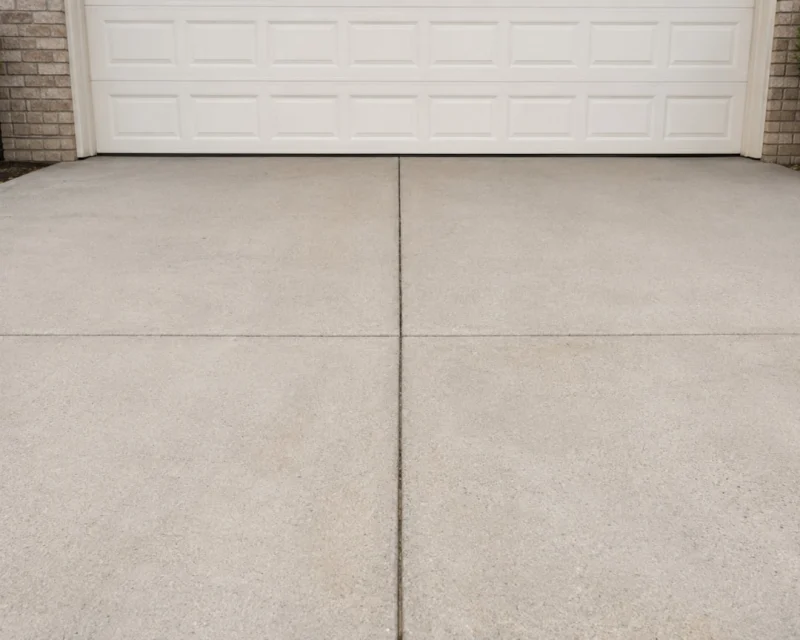
In modern surface engineering, epoxy floors are no longer just a cosmetic upgrade for a residential garage; they are a performance system designed around abrasion resistance, chemical exposure, hygiene, load distribution, and long-term lifecycle cost. What makes this topic especially relevant today is the way the same epoxy flooring architecture is being adapted across distinctly different environments: a home garage, a logistics bay, a commercial kitchen, a brewery floor, a winery floor, a dairy floor, and even a meat processing floor. The underlying chemistry may be similar, but the specification, substrate preparation, slip resistance, and maintenance strategy can differ dramatically.
This analysis goes beyond the usual comparison of garage floor paint versus garage epoxy floor coating. It examines the engineering decisions that separate a durable epoxy coated garage floor from a premature failure, and it connects those decisions to industrial applications where sanitation, thermal shock, and regulatory compliance are non-negotiable. For readers searching for epoxy flooring near me, epoxy flooring contractor near me, or garage floor epoxy installers in Sydney, the key insight is simple: the quality of the system matters far more than the label on the product.
Why Epoxy Systems Outperform Conventional Floor Paint
At a technical level, the performance difference between garage floor paint and epoxy coating garage systems comes down to polymer crosslinking and film build. Garage floor paint is typically a single-component coating with limited chemical resistance and lower abrasion tolerance. By contrast, epoxy flooring garage systems rely on a resin-and-hardener reaction that forms a tightly crosslinked thermoset matrix. That matrix provides much stronger adhesion to prepared concrete and a denser barrier against oil, water, salts, and many solvents.
In practical terms, this means epoxy floor coatings can achieve substantially better resistance to hot tire pickup, point loads from jacks and tool cabinets, and repeated cleaning cycles. For epoxy floors for garage use, the value proposition is not just appearance; it is reduced dusting, easier decontamination, and longer service life. In commercial settings, the same properties support compliance-driven environments where slips, contamination, and floor wear can affect throughput and safety.
Key technical advantages
- Higher abrasion resistance: Better tolerance to wheel traffic, pallet movement, and dragged equipment.
- Improved chemical resistance: Performs better against oils, fuels, cleaning agents, and mild acids.
- Seamless finish: Reduces joints and crevices where contaminants can accumulate.
- Customizable slip profile: Broadcast aggregates and topcoats can be tuned for wet or dry environments.
- Lifecycle efficiency: Lower maintenance and fewer recoating cycles than paint systems.
Substrate Preparation: The Real Determinant of Success
Most epoxy failures are not caused by the resin itself but by inadequate substrate preparation. Whether the project is garage epoxy floors, epoxy flooring Sydney, or industrial resin flooring contractors Sydney work, the concrete must be assessed for moisture vapor emission, contamination, profile depth, and structural integrity. A mechanically prepared slab with the correct surface profile gives the coating system the opportunity to bond. A glossy or contaminated slab does not.
Professionals typically rely on grinding or shot blasting to create a concrete surface profile suitable for mechanical keying. Cracks, saw cuts, and spalls should be repaired before coating, and any evidence of hydrostatic pressure or excessive moisture should be addressed through moisture mitigation systems. In humid coastal locations such as Sydney, local environmental conditions can make moisture management especially important for epoxy flooring contractor teams and epoxy coating garage specifications.
Critical pre-installation checks
- Concrete compressive strength and soundness
- Moisture vapor emission and relative humidity within the slab
- Oil, silicone, curing compound, or laitance contamination
- Existing membrane compatibility and previous coating history
- Crack movement versus static crack repair requirements
When garage floor epoxy kits are sufficient
A garage floor epoxy kit can work for low-traffic residential spaces if the slab is dry, structurally stable, and well-prepared. However, kits often underperform when applied over lightly etched concrete, unaddressed moisture, or surfaces with old sealers. The difference between a DIY garage epoxy floor paint result and a professionally installed epoxy floor coating is often not the resin content; it is the preparation discipline, coverage control, and topping strategy.
System Design for Garages: From Decorative to Heavy-Duty
Not all garage epoxy floor coating systems are designed for the same duty cycle. A private garage that sees weekend vehicle storage has different performance demands than a workshop used for metal fabrication, detailing, or mechanical repair. In the first case, a decorative flake system may be ideal. In the second, the surface may require higher build, better chemical resistance, and targeted slip resistance around wash-down zones.
For epoxy coated garage floors, the most common advanced build includes a primer, body coat, broadcast layer, and urethane or polyaspartic topcoat. The body coat controls build thickness and encapsulation of aggregate, while the topcoat improves UV stability, stain resistance, and cleanability. This matters because full epoxy systems can amber under sunlight, particularly near open garage doors. In that edge case, a UV-stable topcoat can preserve aesthetics far longer than a basic epoxy floor paint layer.
Specification choices that change performance
- Broadcast flake size: Fine flake offers a smoother finish; larger flake improves visual masking and texture.
- Aggregate selection: Aluminum oxide or polymer grit can improve traction without making cleaning difficult.
- Film thickness: Higher build increases chemical protection but can complicate curing and thermal movement.
- Topcoat chemistry: Polyaspartic and urethane topcoats improve UV and abrasion performance.
For clients comparing garage floor epoxy flooring to garage epoxy floor paint, the advanced recommendation is usually to treat paint as a temporary aesthetic refresh and epoxy as a system solution. In high-value garages, the floor often becomes part of the storage and workshop workflow, so resistance to oil drips, tyre marks, and dropped tools matters just as much as visual appeal.
Industrial and Food-Grade Applications: Where Detail Becomes Compliance
Epoxy flooring is widely deployed beyond garages because its seamless nature supports hygiene and cleaning protocols. In commercial kitchen flooring and floor for commercial kitchen environments, the design objective extends beyond durability. Floors must resist thermal shock from hot water, grease exposure, caustic cleaning chemicals, and slip hazards introduced by food residue. Kitchen epoxy flooring and commercial kitchen epoxy flooring systems are often specified with coving, drainage compatibility, and anti-slip finishes tuned to wet conditions.
In brewery flooring, brewery floor systems must tolerate acidic cleaning regimes, sugar contamination, wet processing, and frequent washdowns. Winery flooring faces tannin staining, acidic spills, and periodic moisture exposure. Dairy flooring and meat processing flooring demand even stricter attention to sanitation, rapid cleaning, and resistant detailing at joints, drains, and wall transitions. In these sectors, resin flooring contractors and epoxy resin flooring contractors commonly use high-performance novolac epoxies or specialized urethane cement hybrids where temperature shock and aggressive cleaning protocols exceed the capacity of standard epoxy flooring contractor products.
Food and beverage design considerations
- Slip resistance: Must balance traction with cleanability to avoid creating sanitation traps.
- Drainage: Falls, coving, and coved skirting reduce standing water and contamination risk.
- Thermal shock resistance: Crucial in kitchens, dairies, and meat processing zones with hot washdowns.
- Chemical selection: Acid, alkali, fat, and sanitizer resistance should match site-specific exposure.
- Regulatory alignment: HACCP-driven planning and local hygiene standards should inform the flooring specification.
The nuanced issue is that a floor that is too smooth can become unsafe when wet, while a floor that is too aggressive can hold soil and become hard to clean. Expert resin flooring contractors resolve this by specifying micro-textured systems and by zoning finishes: smoother in dry prep areas, more aggressive in wet zones, and chemically resilient around cleaning stations.
Research-Driven Performance and Failure Modes
Industry data consistently shows that coating failures cluster around three causes: moisture, contamination, and movement. Even well-formulated garage floor epoxy coatings can debond if water vapor pressure forces osmotic blistering beneath the film. Likewise, unremoved oil saturation can block adhesion, while active cracks can telegraph through rigid systems. This is why experienced epoxy flooring near me searches should be filtered not only by installation price, but by the contractor’s testing process and repair methodology.
Field studies in industrial flooring have also shown that lifecycle cost often favors higher-performance systems. While the upfront cost of epoxy floor Sydney installations may be greater than garage floor paint, the total cost over several years is usually lower when downtime, maintenance, and rework are included. In commercial facilities, even a short shutdown for remediation can exceed the cost delta between a budget coating and a properly specified resin flooring system.
Common failure modes
- Moisture-induced blistering or delamination
- Amine blush affecting intercoat adhesion
- Hot tire pickup in poorly cured garage systems
- Thermal shock cracking in food-processing environments
- Premature wear from under-specified traffic loads
An expert-level nuance: not every floor needs maximum hardness. Some environments benefit from slightly more flexible top systems that tolerate movement or thermal cycling better. This is especially relevant in older concrete slabs, retrofit projects, and facilities with large temperature differentials. The best epoxy floor coating contractors Sydney teams understand that material selection is about compatibility, not just strength.
Practical Strategies for Better Installation and Maintenance
For garage epoxy floor coating projects and industrial installations alike, advanced performance begins before mixing the first batch. The contractor should verify ambient and slab temperatures, dew point spread, and material pot life windows. On larger commercial jobs, workflow planning is just as important as chemistry: staging, sectioning, and cure-time management can determine whether the floor performs as intended or becomes a maintenance burden.
Advanced implementation tips
- Use moisture testing rather than visual inspection alone.
- Specify the topcoat based on UV exposure, not just gloss preference.
- Choose anti-slip texture according to wet/dry risk, not marketing labels.
- Detail drains, edges, and penetrations before the main pour.
- For garages, avoid aggressive tire use until full cure is achieved.
- For kitchens and breweries, validate cleaning chemistry before final specification.
Maintenance should also be system-specific. A well-installed epoxy flooring garage surface can be kept in excellent condition with pH-neutral cleaners and soft mechanical scrubbing. In industrial food spaces, daily cleaning may require more aggressive agents, but the chemical resistance of the topcoat must be matched to the cleaning protocol. The best approach is to write the maintenance plan at the same time as the flooring spec so the operational team is not forced to improvise later.
Market Trends and What Comes Next for Epoxy Flooring
Several trends are reshaping the market for epoxy flooring Sydney, epoxy floor Sydney, and broader resin flooring contractors Sydney services. First, clients are demanding shorter installation windows, which is increasing the use of rapid-cure systems and fast-return topcoats. Second, sustainability discussions are pushing contractors toward lower-VOC formulations and longer-life systems that reduce replacement frequency. Third, digital quoting and locality-based searches such as epoxy flooring contractor near me are elevating the importance of visible project portfolios, specification transparency, and verifiable aftercare.
In industrial applications, hybrid systems are likely to keep growing. Pure epoxy will remain strong where chemical resistance and seamlessness matter, but urethane cement and hybrid resin systems will continue gaining ground in environments with thermal shock or heavy washdown. In garages, the market is moving toward premium decorative-but-functional systems that combine aesthetics, UV stability, and easier maintenance. The next generation of epoxy flooring contractor offerings will likely be less about a generic coating and more about a tailored floor assembly optimized for environment, budget, and operational risk.
The most interesting prediction is that the phrase garage floor epoxy flooring will increasingly imply a complete engineered service rather than a product bucket. As facility managers, homeowners, and food operators become more informed, the decision will hinge on substrate diagnostics, performance guarantees, and lifecycle modeling. That shift will favor installers who can speak fluently about resin chemistry, concrete behavior, and operational use cases, not just decorative finishes. In other words, the future belongs to the specialists who can treat every floor as a technical system rather than a surface alone.