
When you think of Sydney’s workshops — whether it’s an automotive repair shop in the Inner West, a metal fabrication workshop in Western Sydney, or a joinery shop on the North Shore — they all share one thing: their floors take an absolute beating.
Spilled oil, grinding sparks, dropped tools, rolling tool cabinets, pallet jacks, forklifts, foot traffic — and all in an environment where downtime is expensive. If the floor fails, productivity suffers.
That’s exactly why epoxy flooring is fast becoming the #1 choice for workshops across Sydney. In this article, we’ll take a deep dive into workshop epoxy flooring — what it is, why it works so well, your options, costs, maintenance tips, and how to choose the right installer for your workshop.
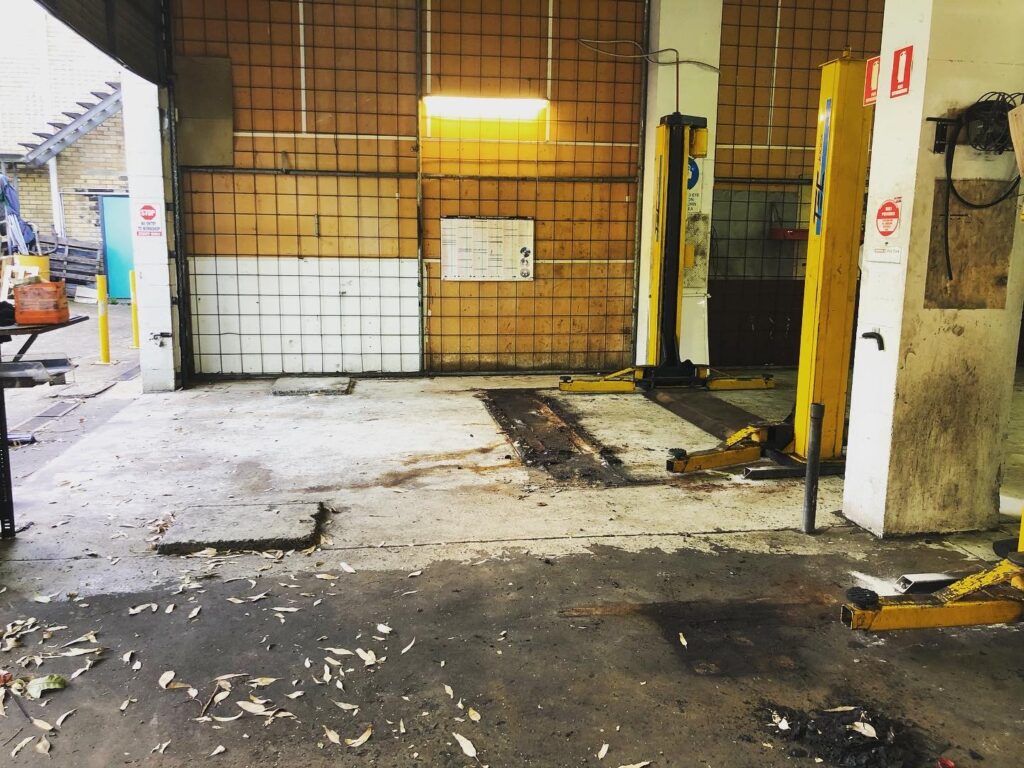
Why Workshop Floors in Sydney Need Something Better Than Bare Concrete
It’s easy to assume concrete is “good enough.” After all, it’s rock hard — right? But in real-world workshops, bare concrete fails fast:
❌ It absorbs oil and coolant → unsightly, dangerous slick spots
❌ It produces dust → not good for delicate assemblies or air quality
❌ It wears quickly → especially in high traffic tool areas
❌ It cracks under impact or load concentration → trip hazards
❌ It’s slippery when wet
And when that happens, you face:
- Downtime to repair the floor
- Increased cleaning effort
- OH&S risks → liability headaches
- Poor impression on customers
That’s why thousands of Sydney workshop owners now invest in epoxy flooring systems for workshops— giving them a floor that looks great, works hard, and lasts for years.
What Is Epoxy Workshop Flooring?
Epoxy flooring is a high-performance coating system — a mix of two liquid components (epoxy resin + hardener) that chemically react to form a hard, plastic-like surface bonded permanently to the concrete slab.
It’s NOT paint → it’s a robust protective layer that:
✅ Strengthens and seals the concrete
✅ Resists oil, chemicals, and abrasion
✅ Is easy to clean and maintain
✅ Can be made non-slip
✅ Has a professional appearance
When applied correctly by professionals, epoxy flooring can handle the brutal realities of workshop life — making it a true long-term investment.
Key Benefits of Epoxy Flooring for Sydney Workshops
Let’s dig deeper into what epoxy floors deliver for your workshop:
1️⃣ Extreme Durability
Your floor has to take impacts, constant movement, and occasional abuse. Epoxy floors are:
✅ Resistant to impacts → dropped tools won’t chip them
✅ Withstands heavy tool cabinets, benches, forklifts
✅ Tough enough for years of rolling traffic and mechanical work
A well-installed epoxy floor outlasts most other flooring options in this environment.
2️⃣ Oil & Chemical Resistance
Oil, coolant, brake fluid, degreasers — all part of daily life in a workshop. Bare concrete soaks them up → creating permanent stains and a dangerous surface.
Epoxy flooring is:
✅ Completely sealed → liquids stay on top → easy to clean
✅ Resistant to oils, fuels, chemicals → maintains appearance and safety
✅ Prevents concrete degradation from chemical attack
In industries like automotive, this is a game changer.
3️⃣ Improved Safety
Safety is king in any Sydney workshop — and the floor plays a big role:
✅ Epoxy floors can include non-slip additives → reduces slip hazards, even when wet or oily
✅ Clear visibility → epoxy coatings often brighten the space by reflecting light
✅ Defined work zones → you can add colour-coded areas for safety (pedestrian zones, danger zones)
Many Sydney workshops pass OH&S audits more easily after installing epoxy floors.
4️⃣ Easy to Clean & Maintain
Workshop owners love this:
✅ No concrete dust
✅ No oil stains
✅ Easy to sweep or mop
A well-maintained epoxy floor not only saves hours of cleaning time but also projects a professional image — important when customers visit.
5️⃣ Aesthetic & Brand Value
A clean, professional-looking workshop floor:
✅ Builds customer trust → especially in automotive or customer-facing shops
✅ Helps attract and retain skilled staff → people want to work in a quality space
✅ Shows pride in the business
From satin to high-gloss finishes, epoxy can be tailored to suit your brand image.
Types of Epoxy Systems for Workshops
Different workshops need different floors — here’s what works:
Self-Levelling Epoxy
✅ Smooth, seamless surface
✅ Ideal for high-traffic workshops
✅ Great for rolling equipment → jacks, hoists, tool cabinets
✅ Popular choice in mechanical workshops and engineering shops
Quartz-Filled Epoxy
✅ Epoxy with broadcast quartz aggregate
✅ Very durable + high anti-slip properties
✅ Perfect for wet or chemical-prone zones → plating workshops, chemical processing areas, wash bays
✅ Slightly more textured surface → maximum grip
Flake Epoxy
✅ Decorative flakes broadcast in epoxy
✅ Ideal for customer-facing workshops → high-end auto shops, bike stores, showroom workshops
✅ Provides a non-slip, easy to clean surface with aesthetic appeal
Anti-Static Epoxy
✅ Specialty system → prevents static build-up
✅ Essential in electronics assembly or repair workshops
✅ Used in some defence-related industries around Sydney
Typical Installation Process for Sydney Workshops
Here’s what to expect:
1️⃣ Surface Preparation
✅ Shot blasting or diamond grinding → absolutely critical
✅ Removes oil, old coatings, and contaminants
✅ Profiled surface ensures maximum bond → the #1 factor in long-term performance
2️⃣ Priming
✅ Primer coat enhances adhesion
✅ Penetrates the concrete and locks in surface profile
3️⃣ Base & Build Coats
✅ Self-levelling epoxy or quartz system applied
✅ Thickness customised → depends on traffic & usage → 2–4mm common for workshops
4️⃣ Topcoat
✅ Final protective layer → defines gloss level and UV stability
✅ Slip-resistant additives as required → adjustable for your needs
👉 Installation time:
Typically 2–4 days for small to mid-sized workshops
Larger facilities → 4–7 days depending on size and complexity
👉 Cure times:
✅ Light foot traffic: ~24 hours
✅ Full mechanical use (vehicles, hoists): ~5–7 days
Workshop Epoxy Flooring Costs in Sydney (2025)
| System Type | Typical Cost (per m²) |
| Self-Levelling Epoxy | $80–$130 |
| Quartz-Filled Epoxy | $90–$150 |
| Flake Epoxy | $90–$140 |
| Anti-Static / Speciality | $120–$200 |
👉 Factors that influence price:
- Floor condition → repairs & prep cost
- Floor size → larger = lower $/m²
- System type → slip-resistant or chemical resistant systems cost more
- Layout complexity → lots of corners = more labour
Maintenance Tips for Epoxy Workshop Floors
A good epoxy floor is low maintenance — but a few simple steps help it last:
✅ Sweep daily → prevents grit scratching the surface
✅ Mop regularly → neutral pH cleaner preferred → avoid harsh solvents
✅ Clean up chemical spills promptly
✅ Periodically check for wear → especially in high-traffic paths → plan topcoat refresh as needed (every 5–7 years typical)
👉 With basic care → a workshop epoxy floor in Sydney should last 10–15 years or longer.
How to Choose the Right Epoxy Installer in Sydney
Choosing the right contractor is key — here’s what to look for:
✅ Experience with workshop environments → not just decorative work
✅ Proper surface prep → if they skip this → walk away
✅ Use of industrial-grade resins → not DIY or hardware store kits
✅ Willing to customise the system → not one-size-fits-all
✅ Real-world references → talk to other workshop owners they’ve worked with
✅ Clear project timeline & warranty
Final Thoughts
In a workshop, your floor is more than just a surface — it’s a working partner. The right epoxy flooring system can:
✅ Improve safety
✅ Reduce maintenance headaches
✅ Enhance your workshop’s professional image
✅ Deliver long-term value
If your workshop floor is letting you down — cracked, stained, slippery, dusty — epoxy flooring is a proven, cost-effective upgrade.