
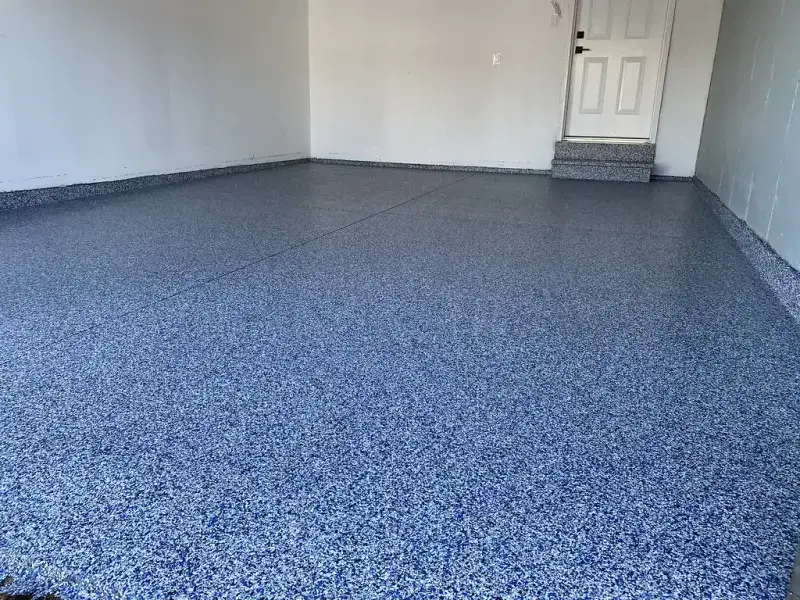
At the expert level, epoxy flooring is not a decorative finish but a performance system engineered around substrate condition, chemical exposure, traffic loading, and maintenance economics. That distinction matters because the same resin family can produce a glossy garage epoxy floor coating, a broadcast-industrial resin floor, or a hygienic surface for commercial kitchen flooring, brewery flooring, dairy flooring, and meat processing flooring. The chemistry may look similar on a data sheet, yet the service outcomes diverge dramatically once you factor in moisture vapor, thermal shock, slip resistance, cleaning protocols, and the real behavior of concrete as a moving substrate.
What makes this analysis unique is that it treats garage epoxy floors, epoxy coated garage floors, and industrial epoxy floor coating systems as variations of one engineering problem rather than a style choice. That allows a more useful comparison between garage floor paint, a garage epoxy floor kit, and a professionally specified epoxy floor coating. It also explains why epoxy flooring Sydney projects, especially in humid coastal conditions, can succeed or fail for reasons that have little to do with the coating brand and everything to do with slab science, install discipline, and the way the facility is actually used.
Background context: the terminology hides the technical gap
In the market, terms such as garage floor epoxy painting, garage floor coatings, epoxy coating garage, garage floor epoxy paint, and epoxy flooring garage are often used interchangeably. Technically, they are not equivalent. Garage floor paint is usually a thinner film with lower solids content and limited chemical and abrasion resistance. A garage epoxy floor kit may contain true epoxy resin and hardener, but it still depends on the installer controlling surface profile, moisture, batch mixing, ambient conditions, and cure windows. By contrast, professional epoxy flooring contractors design a system: primer, body coat, optional broadcast, grout coat, and topcoat.
That system approach becomes even more important in commercial and industrial environments. A kitchen epoxy flooring package must survive caustic cleaners, fats, steam, and frequent sanitation. Brewery floor and winery flooring applications face acids, sugar residues, and wet traction demands. Dairy flooring and meat processing environments add proteins, blood, thermal cycling, and aggressive washdown. In each case, the floor is part of process control, not just building finish.
Why substrate engineering controls the life of the floor
Moisture, pH, and vapor drive are the hidden failure modes
The most common cause of premature epoxy failure is not the epoxy itself; it is what happens beneath it. Concrete is porous, and even a mature slab can emit moisture vapor through capillary pathways. If a coating is applied over excessive in-slab humidity or unresolved hydrostatic pressure, the result is often blistering, osmotic blistering, bond loss, or whitening along joints and cracks. Field failure analyses in coating and flooring practice repeatedly show moisture-related adhesion loss near the top of the list of defect causes.
Advanced specification should start with testing, not guessing. For critical projects, use in-situ relative humidity testing such as ASTM F2170, supplement with calcium chloride testing where appropriate, and validate the surface with a plastic sheet or moisture-mapping protocol. pH alone is not a reliable predictor, but abnormal alkalinity combined with high moisture can degrade primers, especially in garage epoxy floor coatings and commercial kitchen flooring where washdown is frequent. In Sydney and other coastal markets, seasonal humidity can push slabs closer to the dew point, making moisture-tolerant primers and vapor mitigation systems more than a luxury.
Surface profile and bond mechanics determine adhesion
Epoxy does not bond well to smooth, dense, or contaminated concrete. It needs a mechanically prepared profile, typically measured against ICRI CSP guidance. A lightly trafficked garage may perform well with a CSP 2 to CSP 3 profile, while resin flooring contractors handling commercial kitchens or industrial epoxy floor coating contractors often target a more aggressive profile to improve anchorage. Diamond grinding, shot blasting, and crack chasing are not optional labor items; they are the mechanical basis for the coating’s long-term integrity.
Surface contaminants matter as much as profile. Curing compounds, oils, release agents, laitance, silicone, and even residual detergent film can prevent wetting and anchoring. A good epoxy flooring contractor will specify contamination removal, conduct pull-off adhesion checks, and verify that the slab is dry enough at the point of application. This is the technical difference between a durable epoxy floor Sydney installation and a glossy surface that starts peeling at the first hot tire event.
Cracks, joints, and movement must be honored, not hidden
One of the most expensive misconceptions in garage floor epoxy painting is the idea that a coating can permanently mask structural movement. Epoxy is rigid. Concrete moves. If control joints are filled incorrectly or if a slab has ongoing seasonal movement, reflective cracking will telegraph through the coating. The better strategy is to classify cracks, repair non-moving defects with appropriate fillers, honor movement joints, and design transitions so the floor can flex where it must. In industrial settings, this often requires joint sealants compatible with the cleaning regime and wheel traffic.
Epoxy chemistry: selecting the right system architecture
Not all epoxy floors are built from the same resin family
At a simplified level, epoxy coatings are thermoset polymers formed by the reaction of resin and hardener. In practice, the performance window depends on solids content, curing agent selection, film thickness, and topcoat chemistry. Waterborne epoxy offers lower odor and easier application, but it may not match the chemical and abrasion resistance of a 100 percent solids system. Solvent-based systems can aid flow but introduce VOC and shrinkage tradeoffs. For high-performance garage floor epoxy coating applications, 100 percent solids epoxy often provides the best combination of build, bond, and durability.
For commercial kitchen flooring and wet industrial spaces, novolac epoxies are often specified because they offer superior chemical resistance compared with general-purpose epoxies. However, a nuanced design often pairs epoxy primers or body coats with a more forgiving top layer, such as a polyurethane or polyaspartic finish, depending on UV exposure, cure time requirements, and traction targets. That is why the best epoxy flooring contractors rarely sell a single product; they engineer a system by exposure class.
Garage floors benefit from a different balance than food plants
Garage epoxy floors are usually challenged by hot tires, hydraulic fluids, road salts, abrasive foot traffic, and intermittent sunlight. Decorative broadcast systems with colored flakes or quartz can improve slip resistance and hide substrate irregularities, but the key performance issue is hot tire pickup. When a vehicle parks on a coating that has not fully crosslinked or lacks sufficient thermal resistance, plasticizers and heat can soften the film and cause delamination. Polyaspartic topcoats are increasingly used in garage floor epoxy coatings because they resist UV yellowing and accelerate return-to-service.
By contrast, epoxy coated garage floors intended for workshops, collector garages, or EV charging areas may need more chemical resistance and less decorative emphasis. In those cases, the design should prioritize impact resistance, easy decontamination, and compatibility with spills such as brake fluid, antifreeze, and battery-related electrolytes.
Why epoxy floor kits underperform in difficult environments
DIY epoxy floor kit products can be suitable for low-demand domestic garages, but they rarely provide the controlled solids loading, substrate preparation, or test-and-verify discipline required for a professional result. Many kits use short pot lives, modest build thickness, and limited moisture tolerance. The resin may be genuine, but the system is incomplete. For any environment where downtime is costly, or where cleaning and hygiene are regulated, a kit is usually a compromise rather than a specification.
Sector-specific performance: garages, kitchens, breweries, wineries, dairies, and meat plants
Garage epoxy floors are a traffic and thermal management problem
High-quality garage floor epoxy coating systems are judged by their resistance to hot tire pickup, tire scuffing, impact from dropped tools, and stain resistance under oil and solvent exposure. The installation should include edge detailing, threshold transitions, and anti-slip additives calibrated to the use case. Too little texture creates a slick surface when wet; too much texture traps dirt and makes cleaning difficult. For residential garages, a fine-to-medium broadcast usually strikes the right balance. For commercial or fleet garages, heavier quartz broadcast and stronger topcoats are often justified.
In climates with temperature swings or high humidity, such as those seen in epoxy flooring Sydney projects, the installer should monitor substrate temperature relative to dew point and control cure conditions tightly. The best garage epoxy installers will refuse to coat a slab that has not been tested, even if it means delaying the job. That discipline is usually the difference between a ten-year floor and a failed first-year install.
Commercial kitchen flooring must handle heat, grease, and sanitation chemistry
Commercial kitchen flooring introduces a very different load profile. Floors see fat, oil, acidic food waste, caustic detergents, disinfectants, thermal shock from hot water, and continuous slip risk. A plain decorative epoxy floor coating is rarely enough on its own. The system must be seamless, coved at the perimeter, and detailed around drains, gullies, and equipment plinths. Where washdown is intense, polyurethane cement or hybrid resin flooring often outperforms standard epoxy at the wear surface because it tolerates thermal shock more effectively.
That said, epoxy remains critical as a primer or body coat in many floor for commercial kitchen assemblies. Its adhesion, barrier performance, and chemical resistance create the foundation for the more specialized top layers. For operations under HACCP-style hygiene controls, the design objective is not just cleanability but also elimination of microbial harborage points. Any pinhole, void, or joint failure becomes a maintenance liability and a sanitation concern.
Brewery flooring, winery flooring, dairy flooring, and meat processing flooring require process-aware detailing
Brewery flooring and brewery floor systems must endure acidic residues, cleaning foams, wet traction, and repeated equipment movement. Winery flooring is often attacked by organic acids, sugars, and staining compounds that can discolor weak coatings. Dairy flooring sees lactic acid, milk fats, and high-frequency washdown, while meat processing flooring adds blood, fats, proteins, and strict hygiene demands. These environments often justify resin flooring contractors with experience in chemical compatibility, slope-to-drain design, and thermal cycling.
In such facilities, pure decorative epoxy is rarely the final answer. The more robust approach is a layered specification: moisture mitigation if needed, chemical-resistant epoxy primer, high-build body coat, aggregate broadcast for traction, and a top layer selected for thermal and chemical exposure. Where hot water or steam sanitation is routine, the floor system must also handle vapor pressure and thermal expansion without debonding at edges or around drains.
- Use coved skirting to eliminate bacteria-prone corners.
- Specify drain-compatible detailing before the coating is selected.
- Match slip resistance to the cleaning regime, not just the traffic class.
- Consider polyurethane cement in the highest thermal shock zones.
- Plan maintenance around production windows to preserve service continuity.
Selecting epoxy flooring contractors with genuine technical depth
Searches such as epoxy flooring near me, epoxy flooring contractor near me, or Sydney epoxy flooring can produce hundreds of results, but the differentiator is not proximity; it is engineering discipline. The right epoxy flooring contractor should be able to review slab age, moisture data, exposure class, curing schedule, and maintenance constraints before recommending a system. For epoxy resin flooring contractors Sydney or industrial epoxy floor coating contractors Sydney, the most valuable capability is not sales polish but documentation: substrate prep method, coating thickness, cure times, and excluded conditions should all be written into the scope.
Ask any serious contractor for a specification package that includes the following:
- Concrete testing method and moisture readings.
- Surface preparation standard and target profile.
- Coating build thickness in mils or microns.
- Slip resistance target for dry and wet conditions.
- Chemical exposure assumptions and cleaning chemical compatibility.
- Movement joint strategy and repair materials.
- Return-to-service timeline with temperature and humidity assumptions.
In Sydney, where moisture, coastal salts, and temperature shifts complicate adhesion, an experienced epoxy flooring Sydney specialist will also ask about building ventilation, slab history, and whether the slab has been sealed, densified, or previously coated. Those details are more predictive of success than brand preference.
Practical advanced strategies for durable installs
For garage and industrial projects alike, the best outcomes come from sequencing and control. Mechanical prep should be complete before materials arrive. Joints should be mapped, not improvised. The installer should verify that ambient temperature is at least several degrees above the dew point during coating and early cure. Mix ratios should be measured, not estimated. Pot life should be tracked in real time, especially on larger jobs where exotherm can shift application behavior mid-batch.
Advanced installers also think about maintenance at design stage. A floor that is easy to clean will last longer because operators will not resort to aggressive scrubbing that abrades the coating. In commercial kitchens and dairy flooring, this means choosing a surface texture that balances traction with hygiene. In garages, it means using a coating that can tolerate automotive chemicals and periodic degreasers without dulling or softening.
Common failure patterns to avoid
- Applying epoxy over uncured or moist concrete.
- Using garage floor paint where a true coating system is needed.
- Ignoring hot tire pickup in residential garages.
- Under-specifying slip resistance in wet areas.
- Choosing decorative finish over chemical compatibility in food plants.
- Rushing recoat windows and trapping amine blush or contamination.
These failures are preventable, but only if the specification is written for the real environment rather than for a generic product brochure. That is why epoxy floor Sydney projects with rigorous pre-start meetings and post-install quality checks tend to outperform fast-turnaround, low-bid work.
Future implications and emerging trends
Epoxy flooring is moving toward more hybridized, data-driven systems. UV-stable aliphatic topcoats, low-VOC formulations, antimicrobial additives, and conductive or static-dissipative resin flooring are becoming more common in sectors that once relied on one-size-fits-all coatings. In garages, the growth of EV charging and battery-related service areas will raise the importance of chemical spill resistance, electrical safety, and heat tolerance. In food plants, sustainability pressures are likely to push contractors toward longer-life systems that reduce lifecycle replacement frequency rather than simply lowering upfront cost.
The most interesting trend is that specifiers are beginning to ask for measurable performance instead of generic labels. Rather than asking for an epoxy floor coating, they are asking for moisture tolerance, pull-off adhesion values, thermal shock resistance, and documented cleanability. That shift should gradually separate true epoxy flooring contractors from commodity installers. It also suggests a future where garage epoxy floors, commercial kitchen flooring, brewery flooring, and industrial resin flooring are no longer seen as separate product categories, but as application-specific expressions of the same engineering discipline. The companies that win will be the ones that treat the floor as a managed asset, not a finish line.
If the industry continues in that direction, the phrase epoxy flooring near me will matter less than a more demanding question: which contractor can prove, in writing and in testing, that the system will survive the exact stresses of this slab, this climate, and this operation? That is where the market is heading, and it is likely to reward technical transparency over glossy sales language.