
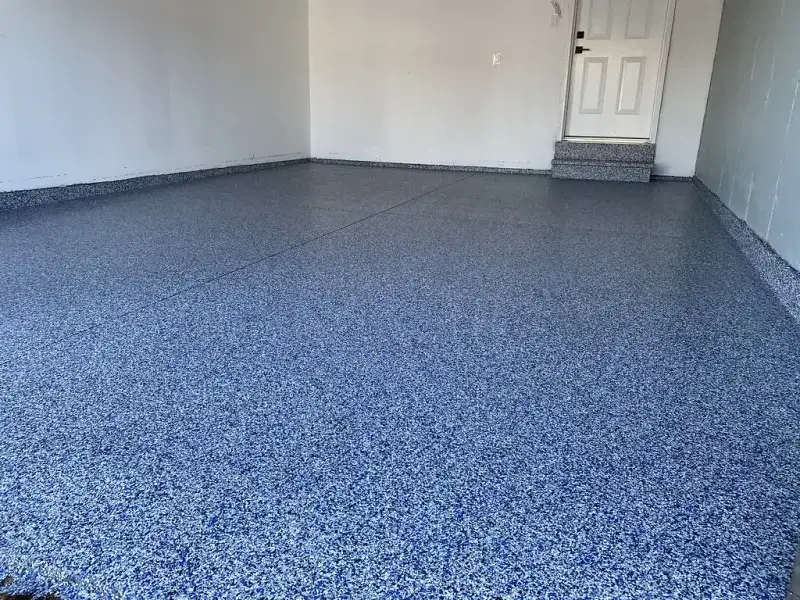
Epoxy flooring has moved well beyond the old idea of a glossy garage finish. In high-demand environments, garage epoxy floors, epoxy coatings for garage floors, and epoxy flooring for commercial kitchens are now treated as engineered systems, not decorative products. That distinction matters: the difference between a floor that looks good for six months and one that performs for a decade usually comes down to substrate preparation, moisture management, resin chemistry, and installation discipline. This analysis takes a technical view of epoxy coated garage floors, epoxy floor coatings, and industrial resin flooring across garages, breweries, wineries, dairies, meat processing sites, and commercial kitchens, with a practical eye on Sydney conditions and contractor selection.
Background Context: Why Epoxy Is Not Just Paint
Readers already familiar with garage floor paint or a basic epoxy floor kit know the marketing gap: paint offers cosmetic coverage, while true epoxy flooring garage systems are built around adhesion, thickness, and resistance to impact, chemicals, and thermal cycling. A garage floor epoxy coating is usually a multi-step assembly consisting of surface preparation, primer, body coat, aggregate or flake broadcast where needed, and a compatible topcoat. In food production and hospitality, the same logic applies, but the performance requirements intensify because the floor must also manage hygiene, slip resistance, washdown, and temperature shock.
Industry experience and failure analysis consistently show that most coating problems are not caused by the resin itself. They arise from inadequate concrete profiling, residual contaminants, unmeasured moisture emissions, or poorly managed curing conditions. That is why professional epoxy floor coating contractors Sydney and industrial epoxy floor coating contractors spend more time on diagnosis than on rolling product.
Engineering the Garage Floor Epoxy System
For residential and light-commercial garages, the primary loads are vehicle tires, steering abrasion, oil and fuel exposure, dropped tools, battery acid, and hot-tire transfer. Hot-tire pickup is especially important: when a vehicle returns after highway driving, softened polymers can bond poorly if the coating is under-cured or too thin. This is why garage floor epoxy painting with a thin film often fails where an epoxy flooring contractor near me would specify a proper 100 percent solids system.
Substrate Preparation Drives Performance
The concrete surface should be mechanically prepared, not merely acid etched. In professional practice, shot blasting or diamond grinding is selected to achieve a concrete surface profile that allows mechanical keying, typically aligned to ICRI guidance. For most epoxy floor coating applications, a CSP in the 3 to 5 range is common, while mortar-style or heavily broadcast systems may need a more aggressive profile. Any laitance, curing compounds, sealers, oils, or efflorescence must be removed before primer application.
- Test for surface contamination before coating, especially oils and silicone residues.
- Verify slab soundness and repair cracks with low-shrink epoxy fillers or mortar.
- Check joint integrity and decide whether movement joints will remain active or be rebuilt.
- Measure moisture, do not guess. ASTM F2170 in-situ RH testing and related emission checks remain critical.
Moisture, Vapor Pressure, and Adhesion Risk
Moisture is the silent failure mode in garage epoxy floor coatings. Even when the surface appears dry, vapor pressure from the slab can push osmotic blistering, whitening, or debonding months later. Sydney epoxy flooring projects are especially vulnerable when seasonal humidity, coastal influence, and slab age combine. A proper epoxy floor Sydney specification should consider dew point during installation, slab RH, and any requirement for a moisture vapor mitigation primer.
In edge cases, a floor that technically passes a visual inspection may still need a mitigation layer because the slab has no functioning vapor barrier beneath it. This is one reason a search term like epoxy flooring near me is not enough; the installer must document moisture behavior, not just quote a square meter price.
Thickness, Impact Resistance, and Finish Selection
Not all epoxy floor coatings are created equal. A thin garage floor paint can improve appearance, but it rarely delivers the impact resistance and chemical durability of a high-build epoxy floor coating. For garages with heavy SUVs, workshops, or storage racking, a flake broadcast over a pigmented base coat improves slip resistance, hides dusting, and reduces visible wear. In harsher environments, epoxy mortar or hybrid resin flooring contractors may recommend a thicker build for greater indentation resistance.
Practical selection logic for garages
- Choose a decorative flake system when appearance and moderate traffic are the main goals.
- Choose a full-broadcast or high-build system when slip resistance and durability matter more than mirror gloss.
- Choose chemical-resistant topcoats where fuel, degreasers, or battery acid are regular exposures.
- Avoid assuming an epoxy floor kit equals a professional garage epoxy floor coating; DIY kits often have thinner solids content and weaker prep.
Epoxy Coating vs Epoxy Floor Paint vs Full Resin Flooring
Commercial search terms often blur important distinctions: garage floor epoxy paint, garage epoxy floor paint, epoxy coating garage, and epoxy coated garage floors are not interchangeable in technical terms. Paint is generally a thinner film designed for simpler cosmetic refreshes. True epoxy coating systems are engineered for bond strength and film build. Resin flooring contractors may also specify polyurethane, polyurethane-cement, or hybrid systems depending on the thermal and chemical environment.
The performance gap becomes obvious under stress. Paint may chalk, hot-tire lift, or wear through at traffic lanes. A properly specified epoxy floor coating can withstand much more aggressive service, but even epoxy has limits when exposed to rapid thermal cycling or very hot washdowns. That is where advanced system design matters more than brand names.
Commercial Kitchens and Food-Grade Flooring Requirements
Commercial kitchen flooring is one of the most demanding applications for epoxy flooring kitchen systems. The floor must handle water, fats, detergents, dropped pans, carts, and frequent cleaning with alkaline or acidic agents. It also needs safe slip resistance under wet conditions, hygienic detailing around drains and coving, and resistance to food acids and thermal shock. For kitchen epoxy flooring, the best systems are usually high-build, seamless, and properly detailed at junctions so that dirt and moisture do not accumulate.
Hygiene and Washdown Design
In a floor for commercial kitchen environments, the floor finish is only part of the hygiene outcome. Coving at the wall base, crack-free transitions, and correct drainage slope are equally important. A flat but impervious floor can still fail if water ponds around equipment legs or at door thresholds. Facilities using HACCP-based controls often prefer epoxy resin flooring because it can be detailed without grout lines and cleaned more predictably than many tiled systems.
- Use coved skirting where washdown and sanitation are routine.
- Specify textured finish levels carefully to balance slip resistance against cleanability.
- Plan expansion joints so they remain maintainable and do not become bacteria traps.
- Coordinate floor falls and drainage before coating, not after.
Thermal Shock and Cleaning Chemistry
Thermal shock is a frequent failure trigger in bakery flooring and commercial kitchen epoxy flooring. Floors may be hit with hot water, steam, or heated oil splashes and then immediately cooled during cleaning. Standard epoxy can perform well, but extreme thermal cycling may justify a hybrid resin system or a carefully selected topcoat. The same is true for aggressive caustic or acidic cleaning regimes, where epoxy floor coatings must be matched to the chemistry actually used onsite.
For a commercial bakery flooring installation, flour dust and sugar residues are only part of the story. The more significant issues are washdown frequency, heat near ovens, and the need to keep the floor both hygienic and easy to inspect. In practice, the smartest systems are those designed around the cleaning method, not just the traffic load.
Brewery, Winery, Dairy, and Meat Processing Flooring
Brewery flooring, brewery floor epoxy, winery flooring, dairy flooring, and meat processing flooring are all chemically active environments. Organic acids, yeasts, alkalis, sanitizers, blood proteins, fats, and high-pressure washdowns create a much more punishing service profile than a standard garage. Epoxy flooring in these facilities must resist not only wear but also the accumulation of contamination in seams, pinholes, and imperfect transitions.
When Epoxy Is the Right Choice
In brewery and winery settings, epoxy resin flooring is frequently chosen for its seamless cleanability and resistance to a wide range of production chemicals. In dairies and meat processing rooms, the dominant concerns are sanitation, floor falls, and resistance to hot water and disinfectants. A dense, well-bonded epoxy floor coating can perform very well, particularly in dry processing zones, packing rooms, and traffic aisles.
However, the edge cases matter. Where thermal shock is severe, or where floors are exposed to prolonged hot water and rapid cooling, resin flooring contractors may recommend a hybrid or cementitious urethane system instead of a standard epoxy layer. The key lesson is that food-grade flooring is not a one-product decision; it is a service-condition decision.
Slip Resistance Without Sacrificing Cleanability
High slip resistance is essential in wet food facilities, but overly rough surfaces can trap debris and complicate cleaning. The best systems balance aggregate size, broadcast density, and topcoat selection. In many cases, a controlled broadcast finish provides a better outcome than a glossy smooth surface or a heavily textured one. An experienced epoxy flooring contractor near me should be able to explain the target slip rating and how it will be maintained over time.
Sydney-Specific Considerations and Contractor Selection
Sydney epoxy flooring projects face a combination of humidity, temperature variability, and in some areas coastal exposure. That matters during installation and throughout service life. Floors in suburbs closer to the coast may face elevated salt contamination in the surrounding environment, while enclosed garages can trap humidity that extends cure times. For epoxy flooring Sydney projects, contractors should be able to demonstrate how they manage dew point, ventilation, and cure windows.
When evaluating epoxy floor Sydney providers, ask for more than a quote. Competent epoxy floor coating contractors Sydney and epoxy flooring contractor teams should provide a written specification, product data sheets, primer strategy, moisture testing approach, and details on how they will handle joints, drains, and repairs. Search phrases like epoxy flooring near me or epoxy flooring contractor near me are useful only if the shortlisted contractor can show actual technical competency.
- Request substrate testing results and a moisture management plan.
- Confirm whether the system is waterborne, solvent-free, or 100 percent solids.
- Ask how the floor will perform under hot tires, washdown, chemical spill, or thermal shock.
- Review warranty exclusions carefully; many defects trace back to substrate conditions.
Advanced Installation Strategy and Quality Control
At expert level, epoxy flooring is less about application and more about process control. The most successful installations are built around measured variables: surface profile, slab RH, ambient conditions, batch mix ratio, pot life, and recoat windows. Even small errors in mixing or cure timing can cause amine blush, roller marks, soft spots, or delamination.
Critical QA checkpoints
- Document ambient temperature, slab temperature, and relative humidity before each coat.
- Track batch numbers and mix ratios to avoid variability across large bays.
- Use pull-off adhesion testing on sample areas when the project size justifies it.
- Inspect light reflectance and pinholes under raking light before final acceptance.
- Verify that edge details and penetrations are sealed, especially around drains and machinery bases.
For larger facilities, phased installation can reduce downtime, but it requires stricter control over recoat intervals and dust exclusion. In garage epoxy floor coating work, that may mean isolating the area for several days. In a commercial kitchen or brewery, the work may need to be scheduled around sanitation windows, production downtime, or seasonal shutdowns.
Future Implications and Emerging Trends
The next generation of epoxy floors will likely be defined less by shine and more by measurable performance. Low-VOC and solvent-free systems are already standard in many projects, but the bigger shift is toward data-backed specification: moisture logs, slip testing, maintenance tracking, and service-condition matching. Smart facility managers are starting to treat garage floor coatings and industrial flooring as long-term assets with lifecycle cost curves, not one-time capital expenses.
We are also seeing stronger demand for hybrid systems that combine the chemical resistance of epoxy with better thermal shock tolerance, particularly in bakery flooring, brewery floor epoxy installations, and meat processing areas. Antimicrobial claims will remain common, but the real differentiator will be whether the floor can be detailed and maintained so microbes have nowhere to hide. In garages, the trend is toward more durable satin finishes and better UV-stable topcoats that resist yellowing in sun-exposed spaces.
The most likely industry shift is this: owners will stop asking only for epoxy floor paint or a garage epoxy floor kit and start asking how the entire flooring system will perform under their exact traffic, washdown, and moisture profile. That change will separate cosmetic suppliers from true epoxy flooring contractors, and it will reward installers who can design for the slab, the chemistry, and the workflow at the same time. In other words, the future of epoxy floors will belong to systems thinking, not product marketing.