
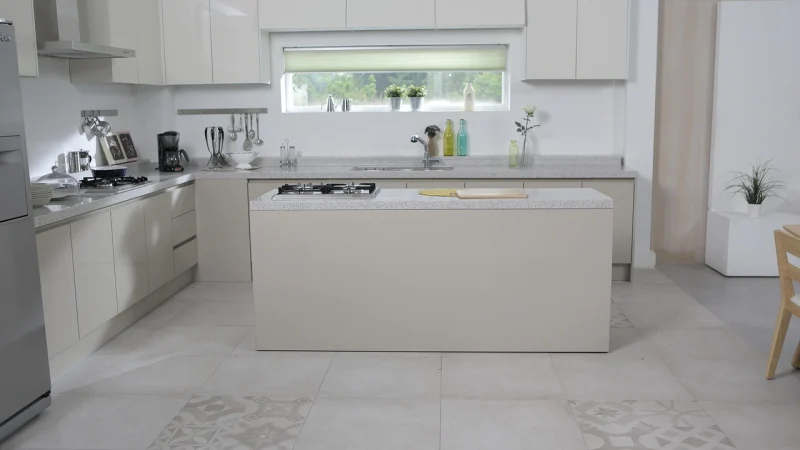
Advanced epoxy flooring is best understood as a performance system, not a decorative finish. In garages, workshops, commercial kitchens, breweries, wineries, dairies, meat processing plants, and high-traffic logistics zones, the difference between a floor that merely looks glossy and one that survives years of abuse comes down to substrate science, resin chemistry, moisture control, and installation discipline. This analysis goes beyond garage floor paint and surface-level product comparisons to examine why epoxy floors for garage use and epoxy coatings for garage floors can succeed or fail, and how the same engineering principles scale into resin flooring for food production and industrial sanitation environments.
For experienced specifiers, the interesting question is rarely whether epoxy works; it is where, how, and in what form. A garage epoxy floor kit can be adequate for a low-demand residential space if the slab is sound and moisture is controlled. A commercial kitchen epoxy flooring system, by contrast, may require broadcast aggregate, coved skirtings, chemical-resistant topcoats, and thermal-shock tolerance. The material family may be the same, but the design intent is entirely different.
Why Epoxy Flooring Performs Differently Across Use Cases
Epoxy coatings cure into dense crosslinked networks that deliver strong adhesion, low porosity, and excellent resistance to oils, fuels, salts, and many cleaning agents. That makes epoxy coated garage floors attractive for vehicle storage and workshop use, where hot-tire pickup, brake fluid, and incidental abrasion are common. In industrial kitchens and processing plants, the same low permeability helps prevent contaminants from embedding into the slab, supporting hygienic cleaning protocols.
However, epoxy is not a universal solution. Its strengths are also its constraints: it can be rigid, it can amber under UV exposure, and it is highly dependent on substrate prep. In garage floor epoxy painting projects, installers often focus on color and gloss while underestimating moisture vapor transmission, slab cracks, or oil contamination. In food-grade environments, the consequences of that mistake are more severe because coating failure can create sanitation breaches, safety hazards, and shutdown risk.
The role of substrate conditions
Concrete is not a neutral base; it is a porous, chemically active composite. Epoxy bonds best to clean, open-pored concrete with adequate surface profile. Industry practice typically relies on mechanical preparation such as diamond grinding or shot blasting to achieve the correct Concrete Surface Profile, or CSP. The cleaner the profile, the stronger the mechanical key, but the profile must match the system: thin films need less profile than self-leveling or mortar builds.
- Moisture testing should be done before specification, not after failure.
- Surface contamination from oil, silicone, curing compounds, or sealers must be removed.
- Cracks, joints, and moving slabs need detailing rather than cosmetic filling.
- Humidity and slab temperature should be monitored during application and cure.
For professional projects, moisture testing methods such as in-situ relative humidity probing and calcium chloride testing remain essential screening tools. Where vapor emission is elevated, moisture mitigation primers or vapor barriers may be required. This is particularly relevant in coastal and humid regions, including many epoxy flooring Sydney installations where ambient moisture and seasonal temperature swings can affect cure behavior and long-term adhesion.
System Architecture: From Garage Floor Coating to Resin Flooring Assemblies
The phrase garage floor epoxy coating can describe several materially different systems. A single-coat DIY kit is not equivalent to a multi-layer industrial resin flooring build. For specifiers and facility managers, the key is to map function to system thickness, aggregate content, chemical resistance, and topcoat chemistry.
Common epoxy system types
- Primed thin-film epoxy: economical and suitable for light-duty garages or decorative spaces.
- Self-leveling epoxy: designed to create a smoother, thicker, more impact-resistant finish.
- Broadcast epoxy: quartz or flake broadcast into wet resin for slip resistance and wear life.
- Mortar or slurry systems: high-build assemblies used where severe impact or point loading is expected.
- Hybrid systems: epoxy base with polyurethane or polyaspartic topcoat for UV stability and faster return to service.
Garage floor coatings are often marketed on appearance, but the technical spec should account for service temperature, chemical splash, tire traffic, and cleaning methods. In a garage, a floor may need to resist brake fluid, battery acid, hydraulic oil, and hot-tire stress. In a commercial bakery or brewery, the floor must tolerate hot water washdowns, yeast residues, sugar syrups, organic acids, and repeated sanitizing cycles.
Why Sydney projects demand local expertise
Search behavior such as epoxy flooring contractor near me or epoxy flooring near me is practical, but the best local contractor is the one who understands the environmental and regulatory context of the facility. Sydney epoxy flooring and epoxy floor Sydney projects face a mix of humidity, coastal exposure, intense sun, and varied substrate quality across building ages. Those conditions affect cure speed, amine blush risk, UV yellowing, and the choice between pure epoxy and hybrid topcoats.
For exterior-adjacent garages or spaces with direct sun, epoxy floor coating contractors Sydney often specify aliphatic polyurethane or polyaspartic finishes over epoxy primers to improve UV resistance. The same principle applies to warehouse entries and loading areas where color stability matters as much as chemical resistance. In practice, the best epoxy flooring Sydney contractors are engineering the whole system, not simply selling an epoxy floor coating.
Garage Applications: The Difference Between Appearance and Durability
Residential garages are a deceptively technical environment. The floor sees vehicles, solvents, dragged tools, temperature cycling, and occasional moisture intrusion from car wash runoff or stormwater. A polished-looking garage floor paint may initially impress, but if it lacks proper adhesion, film build, or topcoat chemistry, hot tires can delaminate the coating within months.
Advanced performance factors in garage environments
- Hot-tire pickup: caused by soft or under-cured films that cannot withstand heat and plasticizer migration.
- Impact resistance: improved by thicker builds and filled systems rather than thin decorative coatings.
- Slip resistance: controlled by broadcast media and topcoat texture, especially in wet climates.
- Stain resistance: determined by resin density and the chemical resistance of the topcoat.
Garage epoxy floor installers who work at a professional level typically inspect slab flatness, moisture, and contamination before quoting. A truly robust garage epoxy floor paint system might include diamond grinding, crack repair, moisture-tolerant primer, body coat, broadcast flake, and a UV-stable topcoat. By contrast, a one-part garage epoxy floor kit is usually better understood as a maintenance coating rather than a true long-life flooring solution.
There is also a practical distinction between garage floor epoxy painting and epoxy floor coatings designed for heavy use. Painting implies a surface treatment; coating implies an engineered build with controlled film thickness and adhesion metrics. That distinction matters when clients expect their garage floor coatings to survive decades rather than a few seasons.
Food-Sanitation and Process Industries: Where Hygienic Design Matters Most
In commercial kitchen flooring, the specification is shaped by hygiene, thermal shock, and worker safety. Kitchen epoxy flooring systems must support rapid washdown, grease resistance, and slip management while remaining seamless enough to reduce microbial harborage. For a floor for commercial kitchen use, coved transitions at wall bases and around equipment are often as important as the floor finish itself.
Engineering priorities in food facilities
- Seamless transitions: reduce crevices where organic residue can accumulate.
- Thermal shock resistance: critical near ovens, wash stations, and steam exposure.
- Chemical resistance: needed for alkalis, acids, degreasers, and disinfectants.
- Slip control: essential where fats, water, and food solids create dynamic traction loss.
- Drain detailing: slopes, falls, and edge sealing must be planned into the build.
Commercial bakery flooring and brewery flooring are especially demanding because they combine heat, moisture, sugar or yeast residues, and frequent cleaning. Brewery floor systems must endure caustic cleaning and occasional spill exposure, while winery flooring often has to tolerate organic acids, pigments, and wet processing zones. In dairy flooring, thermal cycling and lactic acid exposure can be more significant than abrasion alone. Meat processing flooring adds blood, fats, proteins, hot water, and sanitation chemicals to an already harsh service profile.
Epoxy resin flooring contractors Sydney and industrial epoxy floor coating contractors Sydney typically assess whether an epoxy-only system is sufficient or whether a urethane-cement hybrid would perform better in high-thermal-shock zones. Urethane-cement systems often outperform standard epoxy where boiling water, steam cleaning, or repeated washdown is routine. That said, epoxy remains highly effective in dry production spaces, packaging zones, and corridors where chemical resistance and hygiene are prioritized over thermal abuse.
Lifecycle Economics: What Experienced Buyers Actually Need to Measure
The lowest bid is rarely the lowest cost. In garage floor epoxy flooring and industrial resin flooring alike, lifecycle cost depends on installation quality, downtime, maintenance frequency, and the cost of failure. An inexpensive coating that delaminates under moisture pressure can cost more than a premium build that remains in service for years.
Key cost drivers beyond material price
- Downtime: especially important in commercial kitchens, breweries, and logistics operations.
- Rework risk: moisture issues or slab defects can force complete removal and replacement.
- Maintenance complexity: textured systems may clean better than glossy ones in wet environments.
- Service interruption: a failed coating can trigger shutdowns, safety hazards, or compliance issues.
For garages, the economic tradeoff often centers on aesthetics versus resilience. For industrial clients, it is usually about uptime and sanitation. Epoxy floor coatings that are easy to clean and repair can reduce labor hours and improve audit readiness. In facilities subject to HACCP-style hygiene controls, predictable cleanability is often more valuable than visual perfection.
Specification and Contractor Selection for Advanced Projects
Choosing epoxy flooring contractor near me or epoxy flooring near me should be the beginning of due diligence, not the end. The best contractors provide substrate testing, written scope definitions, mockups, cure schedules, and maintenance guidance. They also distinguish between decorative garage floor coatings and industrial resin flooring with compliance-driven performance requirements.
What to demand before awarding the job
- Documented moisture testing and slab assessment.
- Defined surface preparation method and target CSP.
- System datasheets for primers, body coats, and topcoats.
- Slip resistance targets for wet and dry conditions.
- Compatibility with cleaners, sanitizers, and process chemicals.
- Clear warranty language tied to substrate conditions and maintenance.
For Sydney epoxy flooring projects, contractor experience with local concrete conditions, coastal exposure, and fast-track scheduling is a meaningful differentiator. The same applies when selecting epoxy floor coating contractors Sydney for food plants or warehouse spaces. A qualified installer should be able to explain why one project needs a garage epoxy floor coating, while another demands a thicker system or a different resin family altogether.
One subtle but important edge case: a slab that looks dry can still release enough vapor to destabilize a coating. This is common in older garages, ground slabs without an effective vapor barrier, and renovated food facilities with unknown construction history. In these cases, epoxy flooring contractors should consider moisture-mitigating primers or alternative resin systems rather than relying on product claims alone.
Emerging Trends and Future Implications
The next generation of epoxy floors for garage and industrial use is moving toward greater specificity, not just greater hardness. Manufacturers are refining low-VOC formulations, faster-curing hybrid systems, and topcoats that combine UV stability with higher abrasion resistance. For high-sanitation environments, seamless resin flooring is also evolving toward easier audit compliance, improved color coding, and more reliable anti-slip performance under contamination.
Trends shaping the next wave
- Fast-return systems: shorter cure windows for commercial downtime-sensitive projects.
- Hybrid chemistries: epoxy primers with polyurethane or polyaspartic wear layers.
- Better moisture tolerance: improved primers and vapor barriers for difficult slabs.
- Precision texture control: slip resistance tuned for specific wet or dry operations.
- Digitized QA: moisture logs, substrate records, and installation traceability.
For garage epoxy floor coating users, the market is likely to split into two camps: decorative systems optimized for quick installation and premium engineered systems designed for longevity. For commercial kitchens and process plants, the winning products will be those that reduce cleaning time, minimize microbiological risk, and survive repeated thermal and chemical shocks without compromising safety.
The most interesting prediction is that the phrase epoxy floor paint will gradually lose credibility in serious specification conversations. As clients become more informed, they will ask for measured adhesion values, moisture mitigation strategies, thermal shock data, and maintenance plans rather than color swatches. In that environment, the contractors who can explain why a kitchen epoxy floor differs from a garage coating, or why a brewery floor needs a different chemical balance than a retail showroom, will define the next standard of excellence.
Ultimately, the future of epoxy flooring Sydney, resin flooring contractors, and industrial epoxy flooring specialists will belong to those who treat floors as managed systems with measurable performance, not decorative afterthoughts. The next wave of competitive advantage will not come from glossy finishes alone, but from evidence-based design that anticipates failure before it starts.